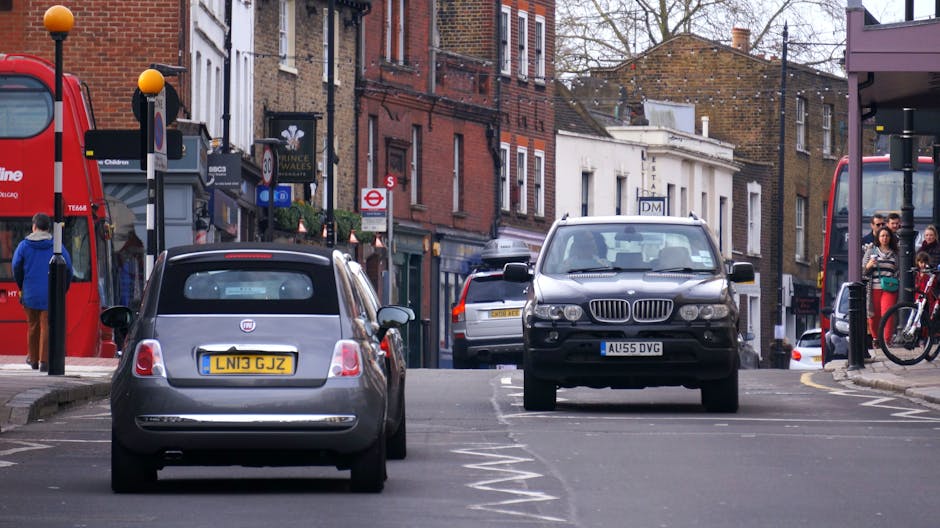
Common access problems on Highbury narrow streets movers

Moving in Highbury can feel straightforward on paper, and then you meet the street itself. Tight turns, parked cars, low tree branches, permit rules, busy school runs, and those lovely old terraced roads that were never designed for a modern removal van. That is where Common access problems on Highbury narrow streets movers becomes less of a phrase and more of a real planning issue.
If you are preparing a move in this part of North London, the access challenge is often the thing that decides whether the day runs smoothly or turns into a slow shuffle of boxes, extra carries, and avoidable stress. The good news? Most of these problems can be managed with the right preparation. In this guide, we will break down what access issues usually look like, why they matter, how movers typically deal with them, and what you can do before moving day to avoid the usual headaches.
Truth be told, narrow-street moves are rarely impossible. They just reward good planning.
Why Common access problems on Highbury narrow streets movers Matters
Access is not just a logistical detail. It affects time, labour, vehicle choice, safety, cost, and how much of your day gets swallowed by small delays. On narrow Highbury streets, a van that cannot stop close to the front door can mean longer carry distances, more lifting, and more chances for damage. Even a few extra metres matter when you are moving wardrobes, mattresses, or a heavy chest of drawers.
Highbury has many streets where width is limited by parked cars, tight junctions, cyclists, delivery vans, and occasional one-way routes. A removal team may be able to get near the property in the morning and then find that traffic or parking conditions have changed by lunchtime. That is why access planning is never a box-ticking exercise. It is part of the move itself.
There is also the neighbour factor. Narrow roads are shared spaces, and a badly positioned van can block driveways, bins, or the only clear route for another vehicle. To be fair, nobody wants to spend moving day apologising to half the street. A little advance thought usually avoids that awkward moment.
Expert summary: The biggest access problem on narrow streets is rarely the van itself. It is the gap between what the vehicle needs and what the street realistically allows. Close that gap early, and the move usually becomes much simpler.
How Common access problems on Highbury narrow streets movers Works
In practical terms, moving on a narrow street is about matching the property, the road layout, and the vehicle to each other. A good mover will usually assess four things: where the vehicle can safely stop, how far items must be carried, whether the road can take a larger van or truck, and whether any permits, timing limits, or loading restrictions apply.
The process often starts before moving day. You share details about the address, floor level, access route, nearby parking, and anything awkward such as staircases, gate widths, or a basement entrance. In many cases, photos help more than a long description. A quick image of the front of the property, the road outside, and any alley or side entrance can reveal a lot.
Then the mover decides what kind of setup is realistic. Sometimes a larger vehicle is still fine. Sometimes a smaller man and van arrangement works better because the street is tighter and easier to park on. In other situations, the smartest move is to use a larger vehicle but stage items from a nearby access point or loading area.
You will also see a bit of improvisation on the day, and that is normal. Streets change. A van may need to park slightly further away than planned because of a neighbour's car, roadworks, or a delivery vehicle sitting exactly where you hoped to stop. That is why experienced movers keep their approach flexible rather than assuming the first plan will be perfect. It rarely is, anyway.
Key Benefits and Practical Advantages
Good access planning on narrow Highbury roads brings more than convenience. It improves the entire move from start to finish.
- Less lifting distance: If the vehicle can park close, items spend less time in the open air and less time in hands and arms.
- Lower damage risk: Fewer handovers and shorter carries usually mean fewer knocks on walls, banisters, and door frames.
- Faster loading and unloading: A shorter route between vehicle and property reduces wasted time.
- Better labour planning: Movers can assign the right number of people and equipment when they know the access conditions in advance.
- More accurate pricing: Clear access details help avoid surprise charges or last-minute scope changes.
- Less stress for you: Honestly, when the parking and carrying plan is settled early, the whole day feels calmer.
There is another, less obvious benefit. Good planning protects the moving crew's rhythm. A smooth day is rarely about speed alone. It is about flow. Boxes come out in sequence, heavier items are not stranded in the hallway, and nobody is circling the block trying to find a legal stopping point while the clock ticks on.
Who This Is For and When It Makes Sense
This topic matters to almost anyone moving within or into Highbury, but it becomes especially relevant if you are dealing with any of the following:
- terraced houses on narrow residential roads
- first-floor or upper-floor flats with limited front access
- streets with resident-only parking or tight loading options
- shared driveways or gated entrances
- properties near busy high streets where stopping space is limited
- moves involving bulky furniture, pianos, or many boxes
It also makes sense if you are comparing removal options and trying to decide whether a standard vehicle, a smaller van, or a full-service removal team is the better fit. For some households, a full house move is best handled through house removals. For others, especially lighter loads or single-room moves, a more compact approach may be enough. There is no one-size-fits-all answer, and that is fine.
If you are moving a flat with tricky stair access, it may also be worth looking at flat removals because the access issue is often not just outside the building. Inside matters too. Narrow stairwells, tight bends, and awkward landings can be just as limiting as the road itself.
Step-by-Step Guidance
Here is the practical way to handle narrow-street access without turning your moving day into a puzzle.
1. Survey the road before you book
Stand outside the property at roughly the time you expect the van to arrive. Look at parking, traffic flow, corner widths, and any signs that restrict stopping. A quiet road at 9 a.m. can feel very different at 3 p.m., especially in an area with school traffic or local deliveries.
2. Measure the key pinch points
You do not need a surveyor's kit. Just check whether gates, paths, side access, and stair turns look wide enough for larger furniture. Note anything that could catch: light fittings, low branches, railings, awkward steps, or a narrow hallway just inside the front door.
3. Share honest access details early
When you request a quote, explain the actual conditions, not the ideal version. If parking is usually difficult, say so. If the only stopping point is round the corner, mention it. If the property is on a one-way street with no obvious loading bay, that matters too. Clear information is a favour to yourself.
4. Match the vehicle to the road
In some cases a smaller vehicle is easier to position and quicker to load because it can stop closer to the property. In others, a larger van or truck makes sense if the street is accessible enough and the load is substantial. A sensible mover will not push a vehicle that simply does not suit the road.
5. Plan for carry distance and crew size
If the van must park some way from the door, the moving team may need extra time or extra hands. That is not inefficiency; it is reality. A 20-metre carry is a different job from a 2-metre carry, and the difference shows up in both pace and fatigue.
6. Protect walls, floors, and corners
On narrow streets, the movement between van and property often feels compressed. Dollies, blankets, straps, and corner protection become more important. In a tight hallway, one careless turn can do more damage than the entire journey. Small detail, big consequence.
7. Keep a backup plan
Because access conditions can change on the day, have a fallback option. Could the van stop at a different point? Is there another entrance? Can a neighbour be asked to move a car, if appropriate and polite? Sometimes the answer is simply "we adapt," and that is perfectly acceptable.
Expert Tips for Better Results
Over the years, a few habits consistently make narrow-street moves easier. Nothing dramatic. Just the practical stuff that saves time and avoids embarrassment.
- Send photos, not just notes. A picture of the street tells the mover more than a paragraph of explanation.
- Be honest about awkward items. A sofa that barely fits through a hall is not the same as a stack of boxes.
- Check for timed restrictions. Some streets feel fine at one time of day and impossible at another.
- Keep essentials separate. When access is tight, you do not want to hunt for keys, documents, chargers, or snacks at the last minute. Small things become very large, very quickly.
- Use one point of contact on moving day. Too many people giving directions outside a narrow front door can slow everything down.
- Protect neighbours' goodwill. A quick apology or a brief explanation goes a long way if a van needs to pause nearby.
A useful habit, if you can manage it, is to walk the route from van to front door with the mover once they arrive. It takes a minute, maybe two. But it helps everyone see the same obstacles. You will often spot the problem before it becomes one.
And yes, sometimes the problem is the bin that has somehow migrated into the only possible stopping place. Urban life, eh?
Common Mistakes to Avoid
Most access problems become expensive only when they were underestimated. That is the honest version. Here are the mistakes that usually cause trouble.
Assuming a normal van will fit
Some roads on the first look seem fine, until you realise parked cars, tight bends, and overhanging branches make the usable space much smaller than expected.
Leaving parking to the last minute
If no space is arranged and no clear loading point is identified, the crew may need to keep circling the block. That drains time and patience fast.
Forgetting internal access
The street might be manageable, but the hallway, stairwell, lift, or landing could be the real bottleneck. It is never only about the road.
Hiding the difficult parts of the move
People sometimes understate the challenge because they worry it sounds inconvenient. In practice, honest detail helps the mover give a better service. Nobody benefits from guesswork.
Not checking timing around the neighbourhood
Highbury streets can be heavily affected by local traffic patterns, deliveries, and school runs. A move planned without thinking about those rhythms can feel harder than it needs to.
Overpacking boxes
When access is narrow, heavy boxes are harder to manoeuvre and more tiring to carry. If the route is awkward, lighter boxes usually make the day cleaner and safer.
Tools, Resources and Recommendations
You do not need a specialist kit to plan a move well, but a few tools and habits help a lot.
- Phone camera: Take photos of the street, front door, hallway, stairs, and any parking restrictions.
- Simple measuring tape: Useful for gates, doorways, stair widths, and furniture dimensions.
- Notebook or notes app: Keep a short list of access details, timings, and who to call on the day.
- Furniture blankets and protective covers: These are not glamorous, but they are worth it.
- Labels for priority items: When access is tricky, you want the essentials unloaded first, not buried at the back.
If you are comparing broader moving support, pages like removal services and packing and unpacking services can help you think through what level of assistance you actually need. Sometimes the right answer is a mixed approach: help with the heavy lifting, but keep the packing under your own control.
For larger or heavier items, it is also worth considering whether furniture removals or piano removals are more appropriate than a general move. Specialist handling matters more when access is tight, because one awkward turn can change the whole plan.
If you are moving office equipment or shifting a business base on a narrow street, office removals and commercial moves are worth reviewing too. Business moves tend to have tighter timing and less tolerance for access delays, which is where planning really pays off.
Law, Compliance, Standards, or Best Practice
Access planning often intersects with parking rules, road safety, and property access expectations. The exact requirements depend on the street, the property, and local conditions, so it is wise to treat this as a practical compliance issue rather than an afterthought.
In the UK, movers and customers generally need to consider parking restrictions, loading limits, obstruction risks, and safe manual handling. If a vehicle blocks traffic, footpaths, or driveways, that can create avoidable problems. On narrow streets, that risk is higher, which is why movers usually prefer a cautious approach.
Good practice also includes safe lifting, safe stacking, and reasonable care around property surfaces. If you have fragile items or difficult access, a mover should think about how to reduce the risk rather than pushing through because "it will probably be fine." Let's face it, probably is not a great plan on moving day.
Insurance matters too. If access is tight, the chance of minor scuffs or accidental knocks increases. That does not mean disaster is likely. It just means the cover, procedures, and handling methods deserve attention. If you want to understand that side more fully, it is worth reading about insurance and safety, along with the company's health and safety policy.
There is also a basic best-practice principle here: the more complex the access, the more important the pre-move assessment becomes. In a narrow Highbury street, that assessment is not optional in any meaningful sense. It is part of delivering the move properly.
Options, Methods, or Comparison Table
Different access problems call for different approaches. Below is a simple comparison of common methods used on narrow streets.
| Method | Best for | Strengths | Limitations |
|---|---|---|---|
| Small van / compact vehicle | Very tight streets, short moves, light to medium loads | Easier parking, better manoeuvrability, often simpler loading | Less capacity, may require more trips |
| Standard removal van | Typical house or flat moves where the street can take a larger vehicle | Good balance of capacity and efficiency | May struggle on the narrowest roads |
| Full removal truck | Larger moves with more furniture and boxes | Efficient for big loads, fewer trips | Harder to position on constrained roads |
| Parking further away with longer carry | Where direct frontage access is blocked or restricted | Flexible and often realistic | Slower, more labour-intensive, higher handling effort |
| Staged loading from a second point | Complex access, multiple entrances, awkward street layouts | Can solve difficult site constraints | Needs coordination and more time |
The right option depends on the load, the street, and the timing. A smaller vehicle is not always the cheapest solution once extra trips are counted. Likewise, the biggest vehicle is not always the smartest choice if it cannot stop safely near the property. Balance matters.
Case Study or Real-World Example
Here is a realistic example from a typical Highbury-style move. A two-bedroom flat on a narrow residential road looked simple at first glance. The property itself was fine, but the street had residents' parking on both sides, a tight bend nearby, and a delivery van habitually taking up the only generous stretch of kerb space.
The first instinct might have been to send a large vehicle and hope for the best. Not ideal. Instead, the move was planned with a smaller access-friendly vehicle, a detailed loading window, and a backup route for carrying items from a point a little further down the street. Photos were shared in advance, and the team knew which furniture pieces needed extra care in the stairwell.
On the day, a parked car narrowed the stop even more than expected. Annoying, yes, but not a disaster. Because the access plan already allowed for a longer carry, the move kept going. It was not glamorous. There was a bit of waiting, a couple of careful turns, and that small squeak a dolly makes on old paving. But the job got done without drama.
The takeaway is simple: when access is unpredictable, a flexible plan beats a perfect plan. Perfect is usually a myth anyway.
Practical Checklist
Use this before moving day if you are dealing with narrow-street access in Highbury.
- Confirm the property address and exact entrance point.
- Check whether the street has parking, loading, or waiting restrictions.
- Take photos of the road, frontage, stairs, hallways, and any side access.
- Measure key doorways, gates, and tight turns.
- List any bulky items, fragile pieces, or unusually heavy objects.
- Tell the mover if the vehicle may need to park around the corner or further away.
- Check whether there is a lift, and if so, whether it is large enough for furniture.
- Ask how the team handles access delays or unexpected parking changes.
- Keep keys, building codes, and contact numbers ready.
- Separate essentials so they are easy to unload first.
Quick reminder: if you can explain the access in one clear minute, the mover can usually plan it properly. If not, it is probably worth gathering a few more details.
For people who need broader help around the move itself, it can also be sensible to review home moves, man with van, or removals depending on the size and shape of the job. And if timing is tight, same-day removals may be worth understanding, though narrow-street access still needs proper planning even when the clock is against you.
Conclusion
Common access problems on Highbury narrow streets movers face are usually not dramatic, but they are important. Tight parking, limited stopping space, awkward turns, and older building layouts can all slow a move if nobody thinks ahead. The good news is that most of these challenges are manageable with the right questions, good photos, realistic vehicle choices, and a flexible plan.
If you are moving in Highbury, do not leave access to chance. A few minutes of honest preparation can save hours of hassle later. That is the whole game, really. Less guesswork, more clarity. And a calmer move for everyone involved.
Get a free quote today and see how much you can save.
When the street is narrow, the clever move is usually the quiet, careful one. That tends to work best.
Frequently Asked Questions
What are the most common access problems on Highbury narrow streets?
The most common issues are restricted parking, tight vehicle turning space, parked cars, loading limits, narrow doorways, and carry distances that are longer than expected. In some streets, all of these show up at once.
How do movers plan for narrow street access?
They usually review the address, ask for photos, check access points, estimate the vehicle size needed, and plan for parking or unloading a little further away if necessary. Good planning starts before the van arrives.
Should I mention access problems when asking for a quote?
Yes, absolutely. The more honest the access details, the more accurate the quote and the better the mover can plan crew size, vehicle type, and timings.
Is a smaller van always better for narrow Highbury streets?
Not always. A smaller van is easier to place on a tight road, but a larger van may still be the better choice if the load is substantial and the street can realistically take it. It depends on the whole move, not just the road width.
What if the van cannot park close to my property?
Then the team may need to carry items from a nearby point, round the corner, or from a legal loading area. This is normal on narrow streets, though it may take more time and labour.
Do narrow-street moves cost more?
They can, because access issues may require extra time, longer carrying distances, or more staff. The final cost depends on the exact layout and move size, so it is best treated case by case.
How can I make moving day easier on a narrow road?
Provide photos, clear directions, honest access details, and any parking information you have. Keep the essentials separated, and make sure someone can answer the mover's questions quickly on the day.
What should I check inside the property as well as outside?
Look at stair width, landings, lift size, hallway corners, and doorway clearances. A difficult hallway can be just as important as a tight street outside.
Are there safety concerns with narrow street removals?
Yes. Longer carries, tight turns, and shared road space can increase the risk of knocks, trips, or vehicle obstruction if the move is not planned carefully. Safe handling and proper positioning matter a great deal.
Can I still move if there is no direct loading space?
Usually yes, as long as the mover can use a legal and practical alternative. That might mean parking further away, using a smaller vehicle, or staging the move from another point.
What kind of property is most likely to have access issues?
Older terraced houses, upper-floor flats, basement properties, and homes on busy or heavily parked roads are often the most challenging. But even modern buildings can have awkward access if the road layout is tight.
What is the best next step if I am unsure about my access situation?
Walk the route, take a few photos, and share them with the mover along with any parking or timing concerns. A quick review now can save a lot of pressure later, and that peace of mind is worth a lot on moving day.